
Hair loss at 24 can feel unfair, frightening, and deeply overwhelming. Many young women assume that thinning hair is something that happens “later in life,” not in their early twenties when they are just beginning to build their careers, relationships, and identity. But female pattern hair loss (FPHL) doesn’t follow age limits—and when it strikes early, the emotional impact can be profound.
Understanding Female Pattern Hair Loss in Young Women
Female pattern hair loss, also known as androgenetic alopecia, is often misunderstood. While commonly associated with older women, it can begin as early as the late teens or early twenties. Unlike men, women usually do not develop bald patches. Instead, they experience:
- Diffuse thinning on the crown
- Widening of the central part line
- Reduced hair density
- Gradual miniaturization of hair strands
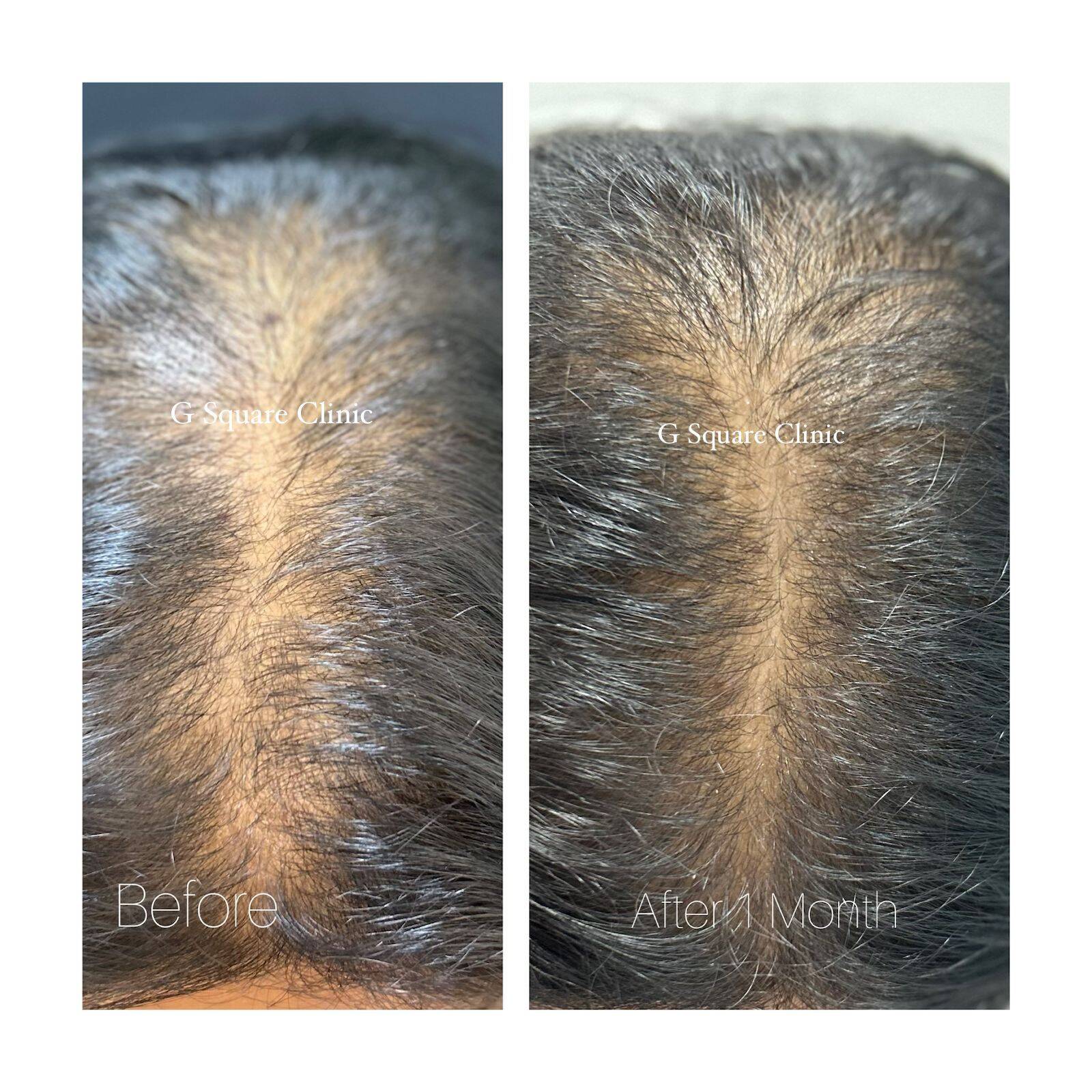
For our 24-year-old patient, the signs were progressive and distressing. She noticed her part widening, her scalp becoming more visible, and her once-voluminous hair becoming limp and sparse. As weeks passed, so did her confidence.
Why Did This Happen? The Root Causes
FPHL is a complex condition driven by multiple factors:
Genetics – Often, someone else in the family has struggled with hair thinning.
Hormonal influence – Even with normal hormone levels, hair follicles may be sensitive to androgens.
Shortened growth cycles – The anagen (growth) phase shrinks over time.
Follicle miniaturization – Hair becomes fine, thin, and fragile.
What makes early-onset FPHL particularly important is that hair follicles are still active and more responsive to treatment—making early intervention crucial.
Crafting a Personalized Treatment Blueprint
Every case of hair loss is unique. Rather than using generic over-the-counter solutions, we designed a customized 360° treatment plan for our patient that addressed both follicular health and scalp environment.
1. Customized Topical Formulations
We developed a tailor-made topical solution specifically designed for her scalp condition. These customized formulations:
- Stimulate dormant hair follicles
- Increase the duration of the growth (anagen) phase
- Reduce inflammation around the follicles
- Improve scalp circulation
- Strengthen and thicken existing hair
- By adjusting concentrations according to her progress, we could maximize results and minimize irritation.
2. Growth Factor Concentrate (GFC) Therapy
GFC therapy represents a new generation in non-surgical hair restoration. Unlike conventional treatments, GFC uses the patient’s own highly concentrated growth factors, derived from their blood, to:
- Activate and strengthen weak hair follicles
- Increase hair shaft diameter
- Boost blood flow to the scalp
- Encourage natural, healthy regrowth
It is minimally invasive, safe, and highly effective—especially in early FPHL.
The Transformation: From Visible Thinning to Visible Confidence
The results after three months were nothing short of remarkable.
Before Treatment:
- A noticeably widened central part
- Significant visibility of the scalp through thinning hair
- Reduced volume and fragile hair quality
After Three Months:
- Dramatic increase in density along the part line
- Visible new hair growth filling previously thin areas
- Stronger, thicker, healthier-looking hair
- Restored coverage and reduced scalp visibility
This wasn’t just a physical change—it was a transformation in how she felt every single day.
The Three-Month Journey: What Actually Happened?
Many patients ask what to realistically expect within the first few months. Here’s how her journey unfolded:
Month 1
- Reduced hair shedding
- Improved scalp health
- Activation of weak follicles
Month 2
- Early baby hairs becoming visible
- Strengthening of existing hair
- Better texture and volume
Month 3
- Noticeable increase in density
- Filled-in part line
- Major improvement in coverage
- Consistent treatment + commitment = visible results.
Why Early Treatment Is the Key to Success
This case highlights a crucial point:
The earlier you treat female pattern hair loss, the better the results.
- Early follicles respond dramatically better to therapy
- Existing hair can be preserved before progressive thinning sets in
- Regrowth is easier when miniaturization hasn’t become severe
- Psychological stress is reduced when addressed early
Ignoring hair loss or delaying treatment often allows the condition to worsen, making recovery more challenging.
For Young Women Facing Similar Hair Loss—Here’s What You Need to Know
This case offers hope and important takeaways:
Hair loss at 24 is not “too early”—and it’s not your fault.
Effective treatments exist, and early results can appear within months.
Personalized plans work better than generic products.
Consistency and professional supervision are essential.
💛 Your Hair Deserves Expert Care
At G Square Skin and Aesthetics, we combine dermatology expertise, advanced technology, and personalized care to address every layer of your hair loss.
Whether it’s pollution, water quality, stress, or a combination—we help you restore healthy, stronger, fuller hair with confidence.
📞 Book your consultation today and start your journey to healthier hair.
Dermatology | Cosmetology | Trichology | Laser Center
📍 Visit: G Square Skin, Hair & Aesthetic Clinic – Hubli, Karnataka
📞 Call/WhatsApp: 91106 10004
🌐 Website: www.gsquareskinandaesthetics.in