
At G Square Skin & Aesthetics, we firmly believe that clinical examination is still the cornerstone of dermatology. While investigations support diagnosis, it is often the trained eye and careful sensory testing that detect conditions early.
Recently, we managed a classic case of Borderline Tuberculoid (BT) Hansen’s Disease—diagnosed primarily through detailed clinical evaluation.
Understanding Hansen’s Disease (Leprosy)
Hansen's disease is a chronic infectious disease caused by Mycobacterium leprae. It primarily affects:
Skin
Peripheral nerves
Mucosa of upper respiratory tract
Early detection is crucial because nerve involvement can lead to permanent disability if untreated.
Patient Presentation
A patient visited our clinic with:
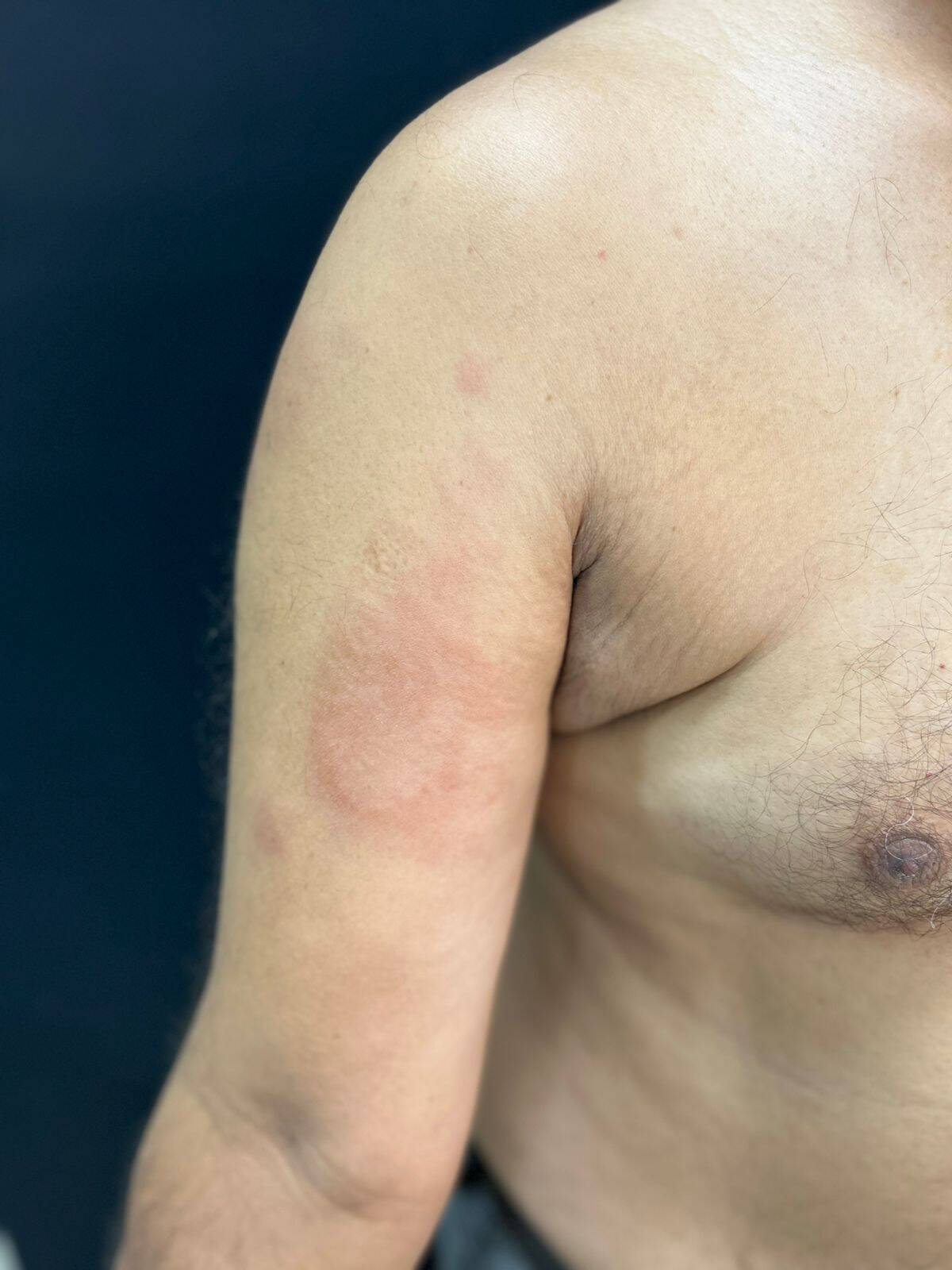
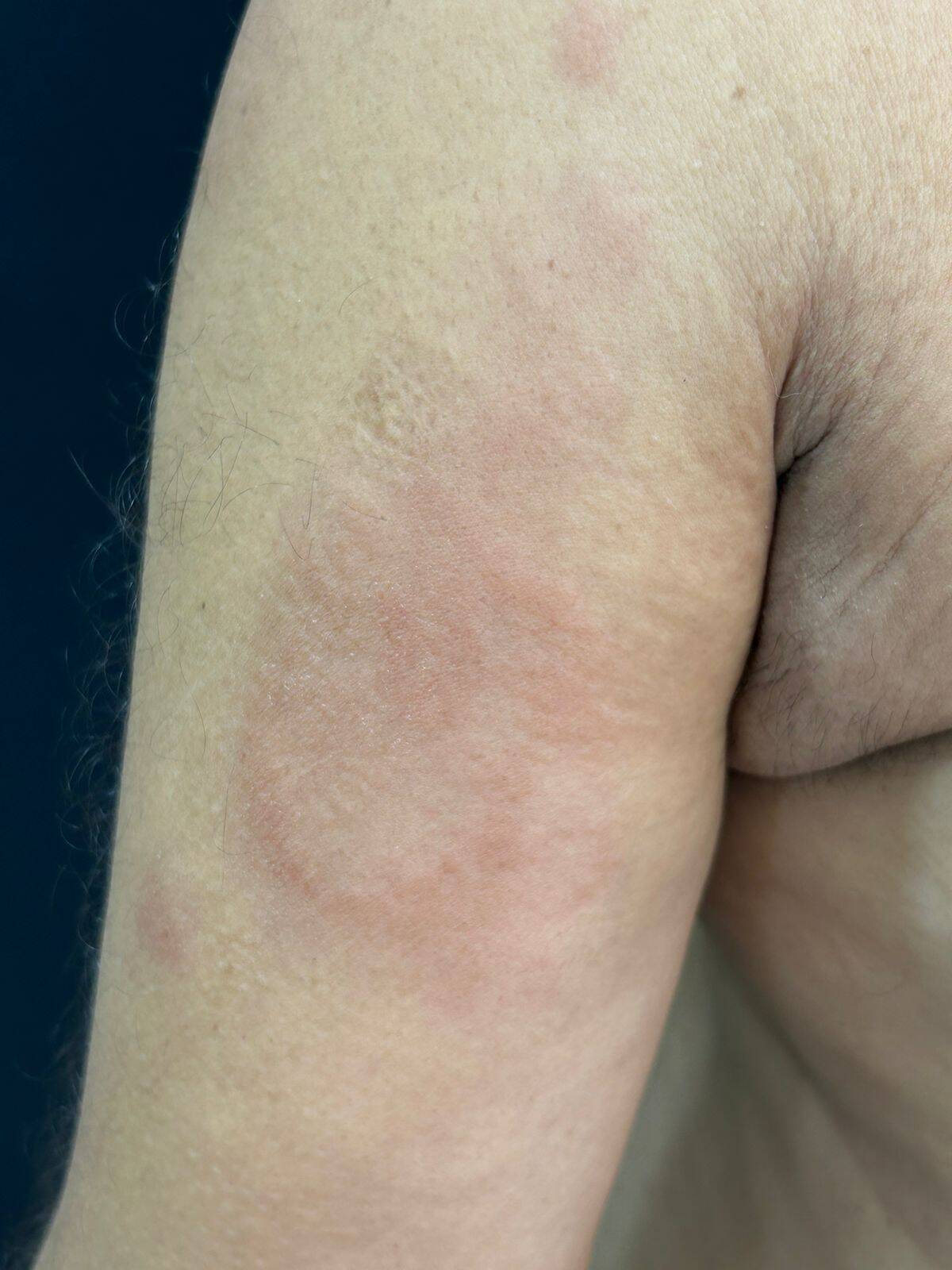
Asymptomatic reddish plaques over the arm
Duration: 6 months
No itching, pain, or burning
Gradual increase in size
Because the lesions were painless and non-itchy, the patient had ignored them—something we commonly see in early Hansen’s disease.
Clinical Examination Findings
On careful examination, we noted:
Well-defined erythematous plaques
Mild surface dryness
Most importantly — loss of sensation over the lesion
This sensory loss raised immediate suspicion.
Sensory Testing – The Turning Point
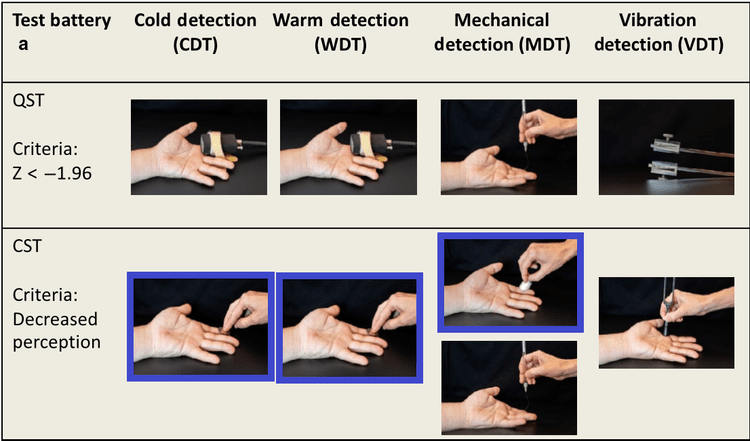
In suspected Hansen’s disease, sensory testing is not optional—it is essential.
We assessed sensation using:
Cotton soaked in spirit to test cold perception
Why Cold Sensation?
In Hansen’s disease:
Cold sensation is lost first (small nerve fiber involvement)
Pain sensation follows
Touch sensation is lost later
The patient was unable to perceive cold over the plaque. This strongly indicated Borderline Tuberculoid Hansen’s disease, a paucibacillary form characterized by:
Well-defined plaques
Asymmetric distribution
Sensory impairment
Peripheral nerve involvement
Why Early Diagnosis Matters
Many early cases are missed because:
Lesions are asymptomatic
Patients overlook mild numbness
Delayed consultation allows nerve damage
Untreated nerve involvement can lead to:
Muscle weakness
Clawing of fingers
Foot drop
Permanent deformities
Social stigma
Early diagnosis prevents all of this.
Diagnosis
The diagnosis was made clinically based on:
Characteristic morphology
Demonstrable sensory loss (cold sensation)
Chronicity of 6 months
While investigations can support diagnosis, clinical expertise remains central in early BT Hansen’s disease.
Management
The good news is:
Hansen’s disease is completely curable with Multidrug Therapy (MDT) provided under national health programs.
Early treatment ensures:
Halted disease progression
Prevention of nerve damage
Excellent long-term prognosis
Reduced transmission risk
When diagnosed early, patients can live completely normal lives without disability.
Public Awareness: When Should You See a Doctor?
Do not ignore:
Persistent reddish or hypopigmented patches
Patches with reduced sensation
Numbness over any skin area
Unexplained thickening of nerves
If a patch does not itch, does not hurt—but feels numb—that is a warning sign.
Early consultation with a dermatologist can prevent lifelong complications.
Final Message
Hansen’s disease is not a disease of the past.
It still exists—but it is curable and manageable when detected early.
At G Square Skin & Aesthetics, we emphasize:
✔ Careful examination
✔ Sensory testing
✔ Early intervention
✔ Evidence-based treatment
Because in dermatology—and especially in Hansen’s disease—
what you detect early, you can treat completely.
Dr. Girishkumar M Chalawadi
Dermatologist
📍 Book Your Consultation Today
Don’t let facial scars affect your confidence.
📞 Call/ WhatsApp: +91 91106 10004
📍 Visit: G Square Skin, Hair and Plastic Surgery Clinic, Hubli
🌐 Website: www.gsquareskinandaesthetics.in
👨⚕ Consult with Dr. Girish Kumar M