
Pimples may heal, but the dark spots they leave behind can last for weeks or months. This condition is called Post-Inflammatory Hyperpigmentation (PIH)—brown or black marks that appear after acne inflammation settles.
PIH is very common in Indian skin tones because melanin production is naturally higher. The good news is that acne marks can be treated safely with early, dermatologist-guided care.
What Causes Dark Spots After Acne?
When acne becomes inflamed, the skin produces extra melanin during healing. This pigment collects in the affected area, creating dark marks after the pimple disappears.
The deeper or longer-lasting the acne inflammation, the darker and more stubborn the pigmentation can become.
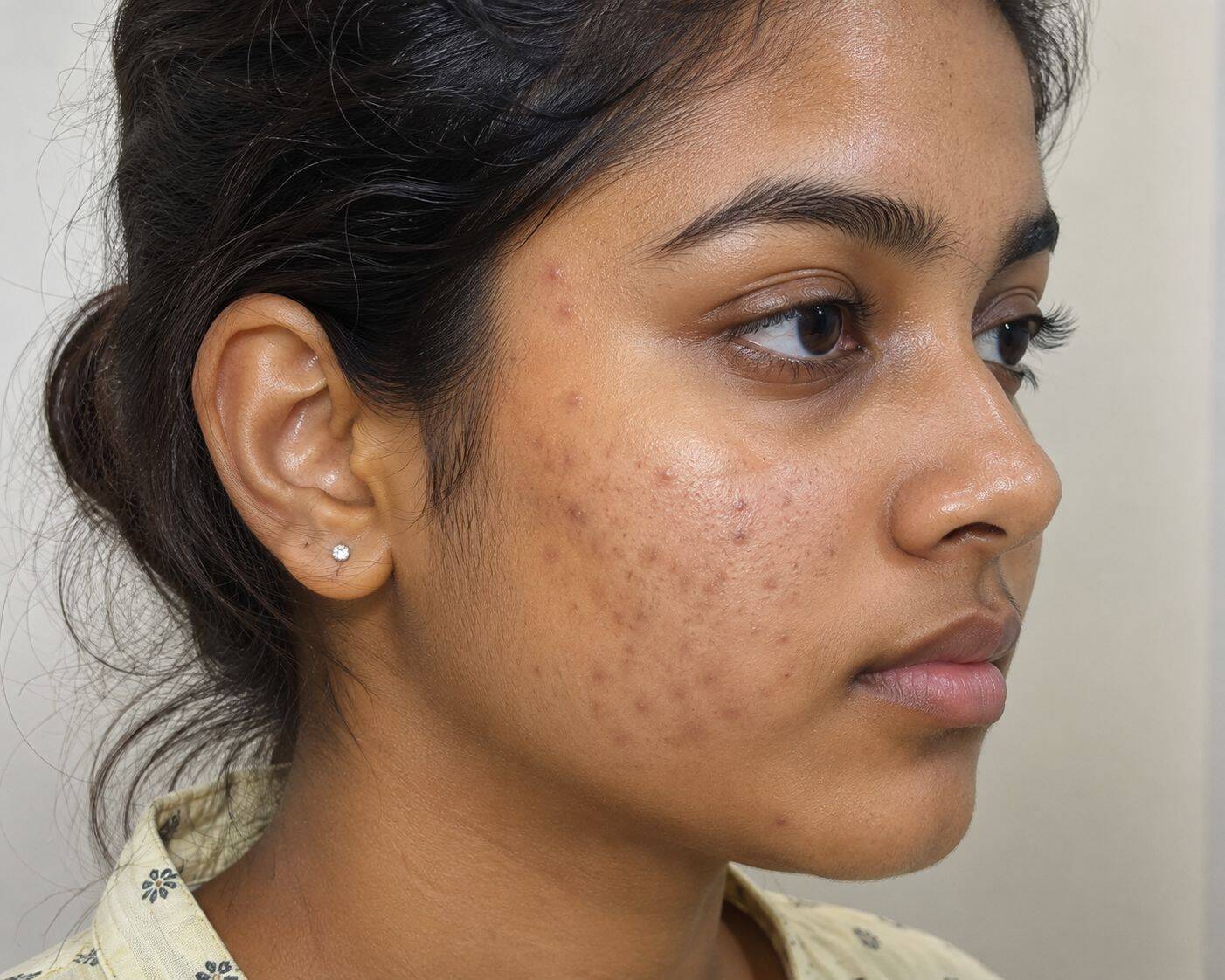
Prevention Is the Best Treatment
The best way to treat PIH is to control acne early.
Every untreated pimple can leave behind:
- Dark pigmentation
- Uneven skin tone
- Acne scars
- Longer treatment duration
Early acne treatment reduces inflammation and prevents new marks from forming.
Mistakes That Make Acne Marks Worse
Avoid:
- Picking or squeezing pimples
- Using lemon, toothpaste, or DIY remedies
- Trying random viral skincare products
- Skipping sunscreen
- Buying acne medicines without dermatology advice
These habits can worsen inflammation and make pigmentation deeper.
Why Creams Alone May Not Be Enough
Prescription creams can help fade pigmentation, but established dark spots often take time.
For faster results, dermatologists may combine medical skincare with advanced procedures such as peels, lasers, or microneedling.
Effective Treatments for Post-Acne Pigmentation
1. Medical Skincare
Dermatologist-prescribed creams help reduce excess pigment and prevent new pigmentation.
2. Chemical Peels
Chemical peels remove pigmented skin cells, improve skin renewal, brighten complexion, and fade acne marks faster.
3. Laser Treatment
Lasers target stubborn pigmentation and improve overall skin tone when performed safely by an experienced dermatologist.
4. Microneedling
Microneedling helps when dark spots are associated with early acne scars by improving collagen production and skin texture.
Combination Therapy Gives the Best Results
The best outcomes usually come from combining:
- Prescription medications
- Chemical peels
- Laser therapy
- Microneedling
- Strict sunscreen use
Your treatment plan should be customized based on skin type, acne severity, pigmentation depth, and scarring.
Never Skip Sunscreen
Sun exposure is one of the main reasons dark spots become darker and last longer.
Daily sunscreen helps:
- Prevent existing marks from darkening
- Reduce new pigmentation
- Improve treatment results
- Maintain long-term skin clarity
Use sunscreen every day, even indoors and during cloudy weather.
Why Dermatologist-Guided Treatment Works Better
A dermatologist can identify whether your marks are:
- Pigmentation
- Acne scars
- Or both
This allows safe and targeted treatment for Indian skin, reducing the risk of irritation, worsening pigmentation, or wasted money on unsuitable products.
Clear Acne. Fade Dark Spots. Restore Your Confidence.
At G Square Skin, Hair & Plastic Surgery Clinic, we offer comprehensive acne and pigmentation treatment using evidence-based medications, chemical peels, microneedling, laser therapy, and customized skincare plans.
📞 Call / WhatsApp: +91 91106 10004
📍 Visit: G Square Skin, Hair & Plastic Surgery Clinic, Hubli
🌐 Website: www.gsquareskinandaesthetics.in
👨⚕️ Consult with Dr. Girish Kumar M. Chalawadi