
Skincare has become increasingly complicated. Social media promotes 10-step routines, multiple serums and trending ingredients that promise clear, glowing skin almost overnight. Yet many people experience more acne, dryness, redness, burning and sensitivity despite spending heavily on skincare products.
1. The Three-Minute Rule Can Help Your Moisturizer Work Better
Most people focus on choosing the right moisturizer but overlook when they apply it.
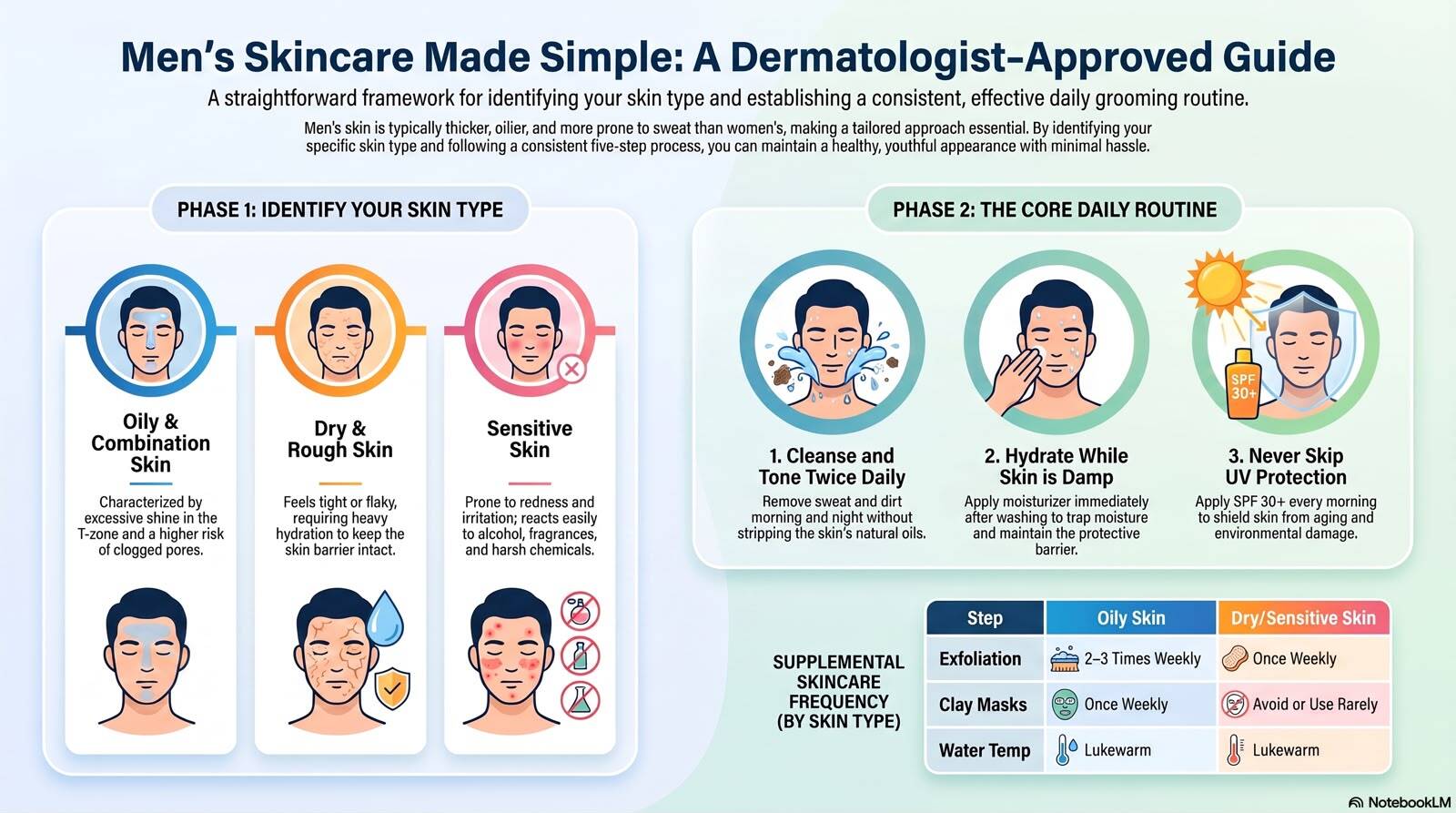
After washing your face or taking a bath, water begins to evaporate from the surface of the skin. Applying moisturizer while the skin is still slightly damp helps trap moisture and reduce dryness.
Dermatologists recommend applying moisturizer immediately after bathing, especially for people with dry or eczema-prone skin. (American Academy of Dermatology)
This is particularly helpful for:
- Dry or flaky skin
- Eczema-prone skin
- Sensitive skin
- Older adults
- Babies and young children with dry skin
Dermatologist’s Tip
Gently pat your skin dry instead of rubbing it. Apply a suitable moisturizer while the skin remains slightly damp.
For very dry skin, a cream or ointment may provide better moisture retention than a lightweight lotion.
2. Men’s Skin Has Different Skincare Needs
Men’s skin is not simply the same skin with a tougher texture.
Research suggests that male skin generally has greater thickness and higher sebum production, partly because oil-gland activity is influenced by hormones. (PubMed Central (PMC))
This may contribute to concerns such as:
- Oily facial skin
- Acne and blackheads
- Enlarged-looking pores
- Excessive sweating
- Razor bumps
- Ingrown hairs
- Shaving-related irritation
Heavy or greasy creams may not suit men with oily or acne-prone skin.
A simple men’s skincare routine may include:
- A gentle facial cleanser
- A lightweight, non-comedogenic moisturizer
- A broad-spectrum sunscreen
- Treatment recommended for a specific skin concern
A skincare routine should be selected according to your skin type—not copied from a friend, influencer or family member.
Persistent acne, pigmentation, razor bumps, itching or hair loss should be assessed by a qualified dermatologist in Hubballi.
3. Sensitive Skin Is More Common Than You Think
Does your skin burn, sting or become red after using a new product?
You are not alone. A global analysis estimated that many adults report some degree of sensitive skin, although questionnaire-based studies may overestimate its prevalence. (PubMed)
Sensitive skin may react easily to:
- Fragrances
- Harsh cleansers
- Strong active ingredients
- Excessive exfoliation
- Frequent product changes
- Weather changes
- Pollution
Common signs of irritated or sensitive skin include:
- Persistent dryness
- Tightness after washing
- Rough or flaky texture
- Redness
- Burning
- Stinging
Increased sensitivity to skincare products
How to Care for Sensitive Skin
Choose gentle, fragrance-free products.
Use a mild, soap-free cleanser.
Avoid frequent scrubbing.
Introduce one new product at a time.
Start active ingredients gradually.
Stop products that cause persistent burning, swelling or redness.
Sensitive-skin symptoms may sometimes be caused by eczema, rosacea, allergic contact dermatitis or another medical condition. Consult a dermatologist if the irritation continues or becomes worse.
4. Humid Weather Does Not Mean Your Skin Is Properly Hydrated
Many people stop using moisturizer during the monsoon because their skin feels sweaty or oily.
However, oiliness and hydration are not the same.
Your skin can produce excess oil while still feeling dehydrated or irritated. Warm and humid conditions may also increase sweating, clogged pores and acne flare-ups.
During humid weather, consider using:
- A gentle cleanser
- A lightweight moisturizer
- Oil-free or non-comedogenic products
- A sunscreen suitable for oily skin
- Clean and breathable clothing
- Fresh clothes after excessive sweating
Dermatologists recommend choosing products labelled oil-free or non-comedogenic for oily and acne-prone skin. Even oily skin may benefit from a suitable moisturizer. (American Academy of Dermatology)
Avoid repeatedly washing or scrubbing your face. Excessive cleansing can irritate the skin and may worsen discomfort.
People experiencing recurrent ringworm, itching or fungal infections should avoid using steroid-combination creams without medical advice. An accurate diagnosis is essential because fungal infections require appropriate antifungal treatment.
5. A Simple Night Skincare Routine Is Often Enough
You do not need to layer several strong products before going to bed.
Night-time is a convenient time to cleanse the skin, apply prescribed treatment and moisturize. However, combining multiple acids, exfoliants and retinoids may cause dryness, irritation or pigmentation.
For most people, a simple night skincare routine is enough:
Cleanse gently.
Apply your prescribed treatment, when required.
Moisturize.
Some retinoids are applied at night, but they should be introduced gradually because they may cause irritation, dryness and peeling. (American Academy of Dermatology)
Do not combine retinoids, exfoliating acids, scrubs and multiple acne treatments without professional guidance.
People who are pregnant, planning pregnancy, breastfeeding or receiving treatment for another skin condition should consult a doctor before starting active skincare ingredients.
The Biggest Skincare Myth: More Products Mean Better Skin
Many people develop skin irritation not because they are doing too little, but because they are doing too much.
Layering multiple acids, retinoids, exfoliants, vitamin C products, peels and trending serums may result in:
- Skin-barrier irritation
- Redness and peeling
- Burning or stinging
- Acne-like breakouts
- Increased sensitivity
- Post-inflammatory pigmentation
- Contact dermatitis
Dermatologists warn that using too many products may irritate the skin, particularly when several products contain strong active ingredients. (American Academy of Dermatology)
Healthy skin is built through consistency—not complexity.
A basic skincare routine should focus on:
- Gentle cleansing
- Regular moisturizing
- Daily sun protection
- Condition-specific treatment
- Consistent product use
Professional guidance when required
What Is a Good Basic Skincare Routine?
For many people, an effective daily skincare routine can remain simple.
Morning Routine
Wash with a gentle cleanser.
Apply prescribed treatment, if required.
Use a suitable moisturizer.
Apply broad-spectrum sunscreen before going outdoors.
Daily broad-spectrum sunscreen with an SPF of at least 30 can help protect the skin from sun damage and premature ageing. (American Academy of Dermatology)
Night Routine
Remove makeup and sunscreen.
Cleanse gently.
Apply dermatologist-prescribed treatment.
Moisturize.
The correct routine depends on your skin type, age, medical history, climate and specific concerns.

When Should You Consult a Dermatologist?
Consider consulting a qualified skin specialist if you experience:
- Persistent or painful acne
- Acne marks or scars
- Severe dryness or itching
- Frequent facial redness
- Burning after using skincare products
- Dark spots or uneven pigmentation
- Melasma
- Recurrent fungal infections
- Unexplained skin rashes
- Sudden or excessive hair loss
- Persistent dandruff
- Nail changes
Swelling, blistering or severe reactions after using a product
Online skincare advice cannot replace a professional skin examination.
Conditions that look similar may require completely different treatments. A dermatologist can identify the underlying problem and create a personalized treatment plan.
Frequently Asked Questions
1.What is the best daily skincare routine?
A basic skincare routine usually includes a gentle cleanser, moisturizer and broad-spectrum sunscreen. Additional treatments should be selected according to your skin type and condition.
2. How do I know whether my skin barrier is irritated?
Dryness, tightness, burning, redness, peeling and increased sensitivity to products may indicate skin irritation or disruption of the skin barrier.
3. Does oily skin need moisturizer?
Yes. Oily skin can still require hydration. Choose a lightweight, oil-free and non-comedogenic moisturizer designed for acne-prone skin.
4. Can too many skincare products cause acne?
Heavy, pore-clogging or irritating products may worsen acne. Combining several active ingredients may also cause irritation that resembles a breakout.
5. Can I use retinol every night?
Not everyone can tolerate nightly retinol use. It should usually be introduced gradually according to the product strength, your skin type and professional advice.
6. When should I visit a dermatologist for acne?
Consult a dermatologist when acne is painful, persistent, leaving dark marks or scars, affecting your confidence, or not improving with basic care.
7. Who can I consult for personalized skincare in Hubballi?
You can consult Dr. Girishkumar M. Chalawadi at G Square Skin, Hair & Plastic Surgery Clinic, Hubballi, for personalized evaluation and treatment of skin, hair and nail concerns.
Final Thoughts
Your skin is your body’s largest organ and deserves care based on science rather than constantly changing online trends.
Sometimes the most effective skincare reset is not adding another serum. It is simplifying your routine, protecting the skin barrier and choosing products that match your skin’s needs.
At G Square Skin, Hair & Plastic Surgery Clinic, Hubballi, every skincare plan is personalized. What works for someone else may not be suitable for your skin type, lifestyle, environment or medical history.
Healthy skin is not about perfection. It is about protection, consistency and evidence-based care.
Book a Consultation with a Dermatologist in Hubballi
Are you struggling with acne, pigmentation, sensitive skin, dryness, itching, fungal infections, dandruff, hair loss or another skin concern?
- Avoid repeatedly changing products or following unverified skincare trends. Get a personalized diagnosis and treatment plan from an experienced dermatologist.
Consult Dr. Girishkumar M. Chalawadi
Consultant Dermatologist
G Square Skin, Hair & Plastic Surgery Clinic, Hubballi
📞 Call Now 👈
💬 Book an Appointment on WhatsApp 👈
🌐 Visit the Clinic Website 👈
📍 First Floor, Shriya Lakshmi Business Centre, Beside New Court, Behind Hosur Bus Stand, Hubli – 580021
Book your dermatology consultation today and take the first step towards healthier, more comfortable skin.
Medical Disclaimer: This article is intended for general education and awareness. It does not replace an in-person consultation, diagnosis or personalized treatment. Consult a qualified dermatologist before starting prescription medicines or treatment for a persistent skin condition.